


Why Whisk(e)y Is One of the Few Assets That Improves the Less You Interfere
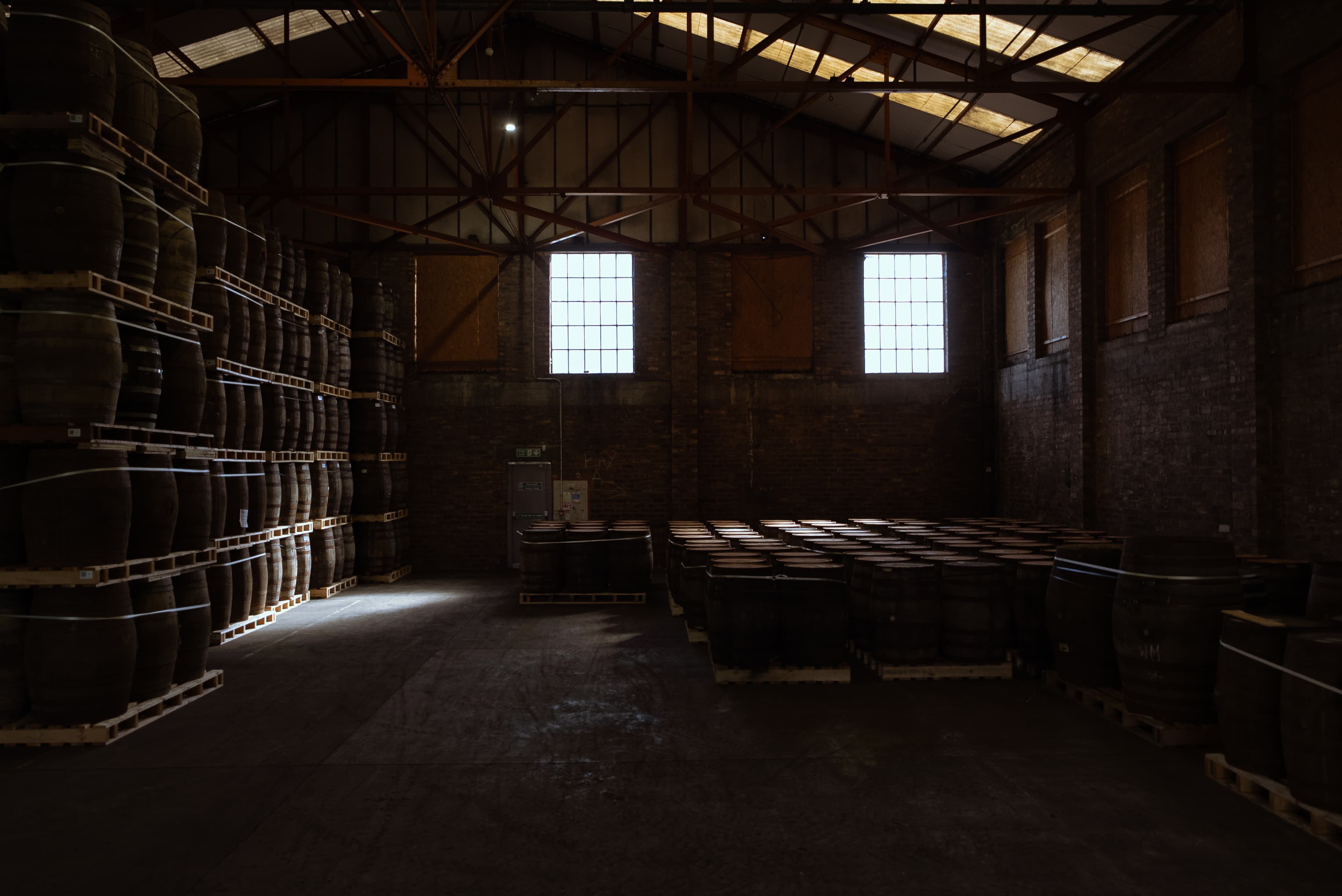
27 March 2026, International Whiskey Day: an opportunity for like-minded whisky lovers across the globe to raise a glass, admire the deep amber liquid within, and slowly breathe in its rich aromas before taking a measured sip of that smooth, complex dram of uisge beatha, celebrating all that whisky has to offer.
But what does that truly mean? We can, of course, wax lyrical about flavour nuances and limited-edition releases, yet whisky offers something that extends well beyond the glass.
Before anything else, it is worth considering that behind every great bottle sits a cask that has spent years, sometimes decades, quietly doing something very few assets can achieve: increasing in value through time and patience alone.
A more considered approach to growth
In today’s climate, many are looking for ways to make their savings work harder, though the process can often feel complex and time-consuming. After years spent in fast-paced environments, where information arrives instantly and demands constant attention, the appeal of a more measured, less demanding approach becomes clear.
Whisky cask investment sits at the opposite end of that spectrum. A cask matures independently, gradually increasing in value without the need for constant oversight. There is no requirement to track daily market movements or react to short-term fluctuations; the pace is slower, more deliberate. Time itself becomes the primary driver of value.
In many cases, this allows for steady growth with a level of detachment that is increasingly rare in modern investing.
What makes whisky different?
At the heart of whisky’s appeal is the process of maturation: the quiet convergence of wood, new-make spirit, chemical reaction, and time. It is a process that requires little intervention, yet consistently transforms both character and value.
Each cask is entirely unique. Even when the same distillery, ingredients, and cask type are used, no two outcomes are identical. Natural variation ensures that every cask develops its own profile, lending a level of individuality and exclusivity that cannot be replicated.
In a world that often feels fast-moving and intangible, the understated, tangible nature of whisky cask investment holds a distinct and enduring appeal.
A tax-efficient alternative asset
Inevitably, tax considerations form part of any investment discussion, and here whisky casks offer a notable advantage.
Under UK law, a cask of whisky is classified as a wasting asset (a chattel), largely due to the gradual evaporation known as the angel’s share. As a result, there is typically no liability for Capital Gains Tax.
The cask itself is fully owned by the investor, registered in their name, and held within an HMRC bonded warehouse. Over time, it continues to mature and increase in value, largely unaffected by the volatility that can impact more traditional asset classes.
The role of scarcity
Perhaps most compelling is the way scarcity develops over time.
If a portion of a cask is bottled after a number of years, the remaining whisky continues to mature. At the same time, the overall volume of that particular vintage is reduced. What remains becomes increasingly limited, and often, more desirable.
This effect is particularly evident in rare or lighter production years, sometimes referred to as ‘shadow vintages’, where availability is naturally constrained from the outset.
Unlike many traditional assets, where partial sale simply reduces total holdings, whisky introduces a dynamic where diminishing supply can enhance the value of what remains.
The numbers behind the narrative
This is not purely theoretical. Over the past 16 years, VCL Vintners have built a portfolio totalling £151.25 million in assets under management, comprising 15,882 casks of whisky.
During that time, they have established relationships with over 100 distilleries, enabling access to favourable purchasing opportunities for their clients.
In 2025, the average annual return on investment was 13.81%, with the highest recorded return reaching 53.39%. Demand continues to grow, particularly across markets in Asia and the United States, further strengthening long-term potential.
Notably, in July 2022, a cask of Scotch whisky from Ardbeg Distillery was sold privately to an Asian collector for £16 million, an indication of the scale at which the market now operates.
A clear and guided process
As with any investment, timing and suitability will always depend on individual circumstances. A considered, tailored approach remains essential.
This is where an experienced partner becomes invaluable. VCL Vintners operate with a strong emphasis on transparency, clear guidance, and long-term relationships. Fully accredited and licensed, they act not only as brokers, but as advisors: guiding investors through each stage of the process in a considered and informed manner.
From acquisition through to eventual sale, your cask remains fully insured, securely stored in an HMRC bonded warehouse and professionally managed, while continuing to mature over time.
For those considering whisky cask investment, the opportunity remains very much open. Speak to our team directly by clicking here.
And throughout the process, one principle remains unchanged: it is your cask. Whether you choose to sell privately, auction, or bottle, every decision rests with you. VCL are there to guide and support, but ownership and control always remain firmly in your hands.
Let's talk whisky and spirits.
Connect with our team to explore investment opportunities.
Journal Highlights


Newsletter
Stay ahead of the market. Get access to exclusive offers, events, insights, and news straight to your inbox.