


Whisky Investment Podcast S3 E6 – Behind the Scenes: Cycles, Trade Deals and Opportunity with Tommy Major

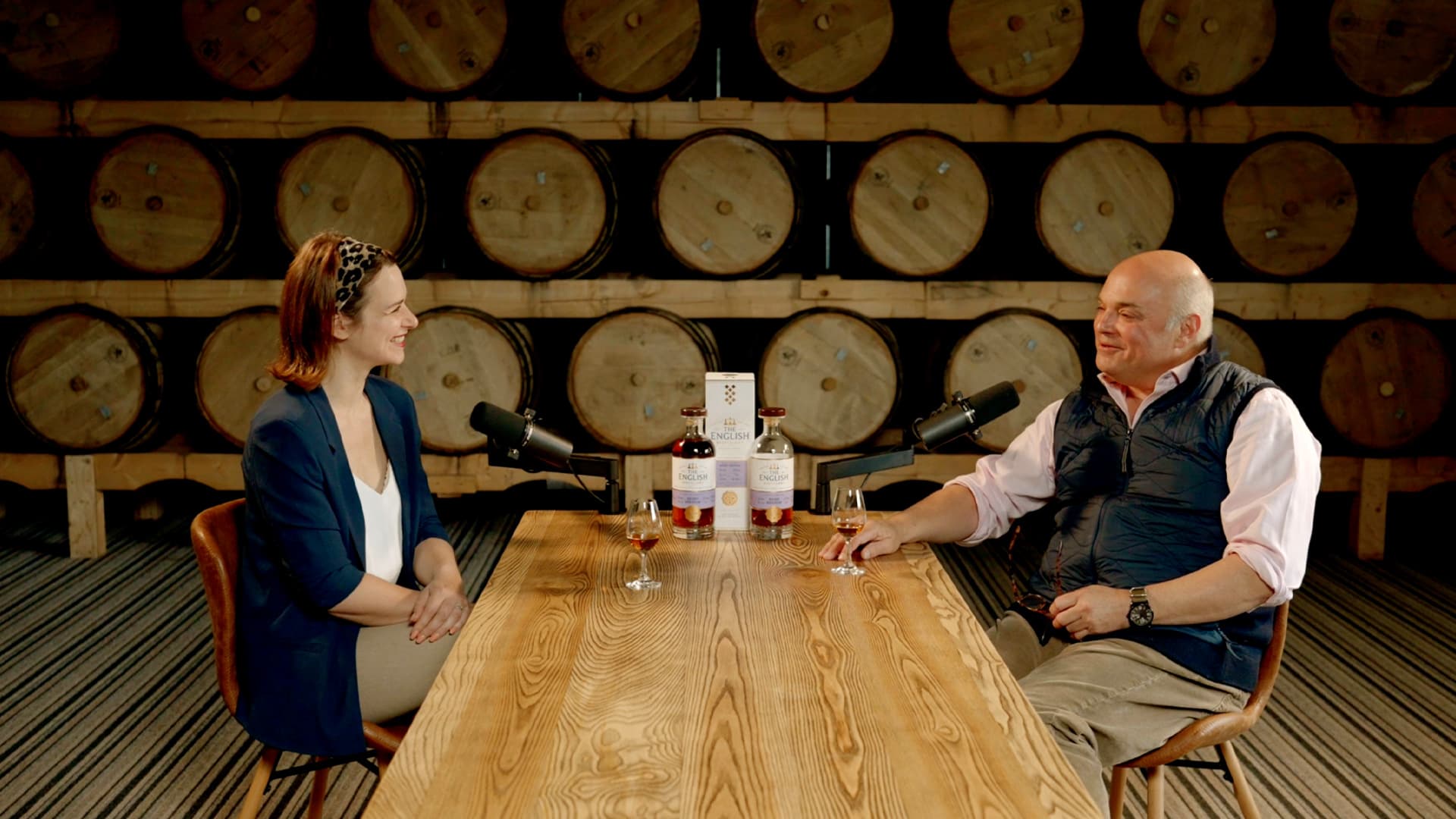
In the latest episode of The Whisky Investment Podcast by VCL Vintners, host and whisky journalist Alwynne Gwilt sits down with Tommy Major, Head Cask Broker at VCL, for a candid conversation about the forces shaping the whisky cask market in 2026. From geopolitical turbulence and shifting trade deals to generational changes in consumption and the cyclical nature of supply, Major offers a grounded, optimistic perspective on where value lies today and where it is heading tomorrow.
A Maturing Market Built on Selectivity
Major, who has been with VCL Vintners for four years, begins by reflecting on how the market has evolved since he joined in 2022. The central theme? Maturity. Investors, he says, have become far more discerning, gravitating towards bigger brands and stronger casks rather than speculating broadly.
“The way in which investors are buying has changed,” Major explains. “They’re looking at bigger brands, stronger casks, because ultimately what we’re trying to achieve is to buy something that’s going to have continuous demand.”
That demand, he notes, is particularly resilient at the premium and rare end of the spectrum. While younger liquid may fluctuate with market conditions, aged and limited casks hold a level of scarcity that insulates them from broader volatility. For VCL Vintners, the strategy has always leaned towards aged liquid, precisely because it cannot be replicated or rushed.
Geopolitical Uncertainty as a Tailwind
When Gwilt raises the subject of geopolitical instability, Major’s response is measured but confident. Rather than dampening appetite, he argues, global uncertainty actually reinforces the appeal of whisky as a tangible, tradeable asset.
“No matter what happens outside, there’s always going to be a value on a cask of whisky,” he says. “You’re not going to wake up tomorrow and find your whisky’s not worth anything.”
He draws a comparison to how investors behave during periods of market turbulence: they look for stability, for something physical that sits in one place and quietly appreciates. Whisky casks, he suggests, offer exactly that. Historically, inflows into the cask market have tended to increase as volatility rises in external markets.
Tax efficiency remains a significant draw, too, and Major acknowledges that uncertainty around tax policy is one of the most common concerns raised by clients in conversation. Yet even here, the long-term fundamentals of whisky as an asset class offer reassurance.
Trade Deals Open New Frontiers
Some of the most energising developments, according to Major, are on the trade front. India’s recent reduction of tariffs on Scotch whisky, bringing them down by 75 per cent from a previously prohibitive 150 per cent, has the potential to transform the landscape. India is already the world’s largest consumer of whisky by volume, and reduced barriers to entry could drive an estimated additional billion pounds into the Scotch whisky sector over the coming years.
Major is careful, however, to temper expectations. “I don’t think it’s something that’s going to cause an overnight boom,” he says. “It’s something that’s going to slowly creep into the market.”
China, too, is making encouraging moves. A reduction from 10 to 5 per cent on tariffs may seem modest, but Major believes the Chinese buying pattern, characterised by large, wave-like purchases, could amplify the impact considerably. Combined with broader momentum across Southeast Asia, the global picture for Scotch is more promising than many headlines might suggest.
The US: Resilient Despite the Noise
The conversation inevitably turns to the United States, where a 10 per cent tariff on Scotch introduced by the current administration has raised eyebrows. Major, though, is unfazed.
He points out that the US remains one of the most sophisticated whisky markets in the world, with deep-rooted consumer demand that a modest tariff is unlikely to disrupt. Any dip in export figures, he suggests, may reflect strategic decisions by suppliers to hold stock rather than a genuine fall in consumer appetite.
“A 10 per cent tariff wouldn’t affect consumer demand,” he says bluntly. “Everything feels like it’s increasing by 10 per cent at the moment anyway.”
Set against the gains in India, China and Southeast Asia, the US tariff looks more like a minor headwind than a structural threat.
Cycles, Scarcity and the Case for Buying Now
One of the most compelling parts of the conversation centres on production cycles. Major explains that what appears to be an oversupply of young liquid is, in fact, a strategic window of opportunity.
Distilleries across Scotland have been easing off production, with some halting operations entirely. The result, Major argues, is a market that is actively engineering future scarcity. While young spirit may be relatively accessible today, the 10, 15 and 25-year-old casks remain in limited supply, and nothing can accelerate their ageing.
“What looks like a slight overproduction today can actually be a really good opportunity to buy liquid at a young age,” he explains. He points to distilleries that released affordable young spirit a decade ago and are now virtually impossible to source from, even for new-make spirit, as evidence that the cycle rewards those who act early and hold with patience.
Southeast Asia: The Market to Watch
When pressed on which region excites him most, Major is unequivocal: Southeast Asia. He highlights Vietnam, which was registered as the fastest-growing whisky market in the world towards the end of last year, with year-on-year growth of around 27 per cent. A burgeoning middle class with growing wealth and an increasingly educated consumer base make the region a natural fit for premium Scotch.
Gwilt echoes the sentiment, recalling her own experiences in South Korea and Japan, where young, enthusiastic drinkers have embraced the heritage and quality of Scotch whisky with genuine passion.
For Major, this dovetails perfectly with VCL Vintners’ model. “We target specific brands, certain age statements, with the foresight that in five to ten years’ time, there’s going to be a buyer for it,” he says. “It could be in this market, or it could be on the other side of the globe.”
A New Generation of Whisky Drinkers
One of the more unexpected threads in the conversation is the generational shift in whisky consumption. Major recounts attending a Burns Night event where several attendees in their early twenties were gathering specifically to drink whisky, challenging the stereotype of the spirit as an older person’s drink.
“The market is growing,” he says, “and if you look at the individuals drinking whisky globally, it’s not just the old stereotype anymore.” This widening demographic base, Major suggests, only strengthens the long-term investment thesis.
The Outlook: Grounded Optimism
Gwilt closes the episode by noting how refreshing it has been to hear a positive, forward-looking perspective at a time when so much of the news feels bleak. Major’s message is clear: the fundamentals of whisky cask investment remain strong, provided investors take a long-term view, choose the right stock and work with a team that understands the nuances of the market.
It is a conversation that cuts through the noise and reminds listeners that behind every cask lies not just liquid, but time, patience and, ultimately, opportunity.
Let's talk whisky and spirits.
Connect with our team to explore investment opportunities.
Journal Highlights



Newsletter
Stay ahead of the market. Get access to exclusive offers, events, insights, and news straight to your inbox.