


Whisky Investment Podcast S3 E7 – Industry Insights: The Craft Behind the Cask with Graham Hamilton, Oakwood Cooperage
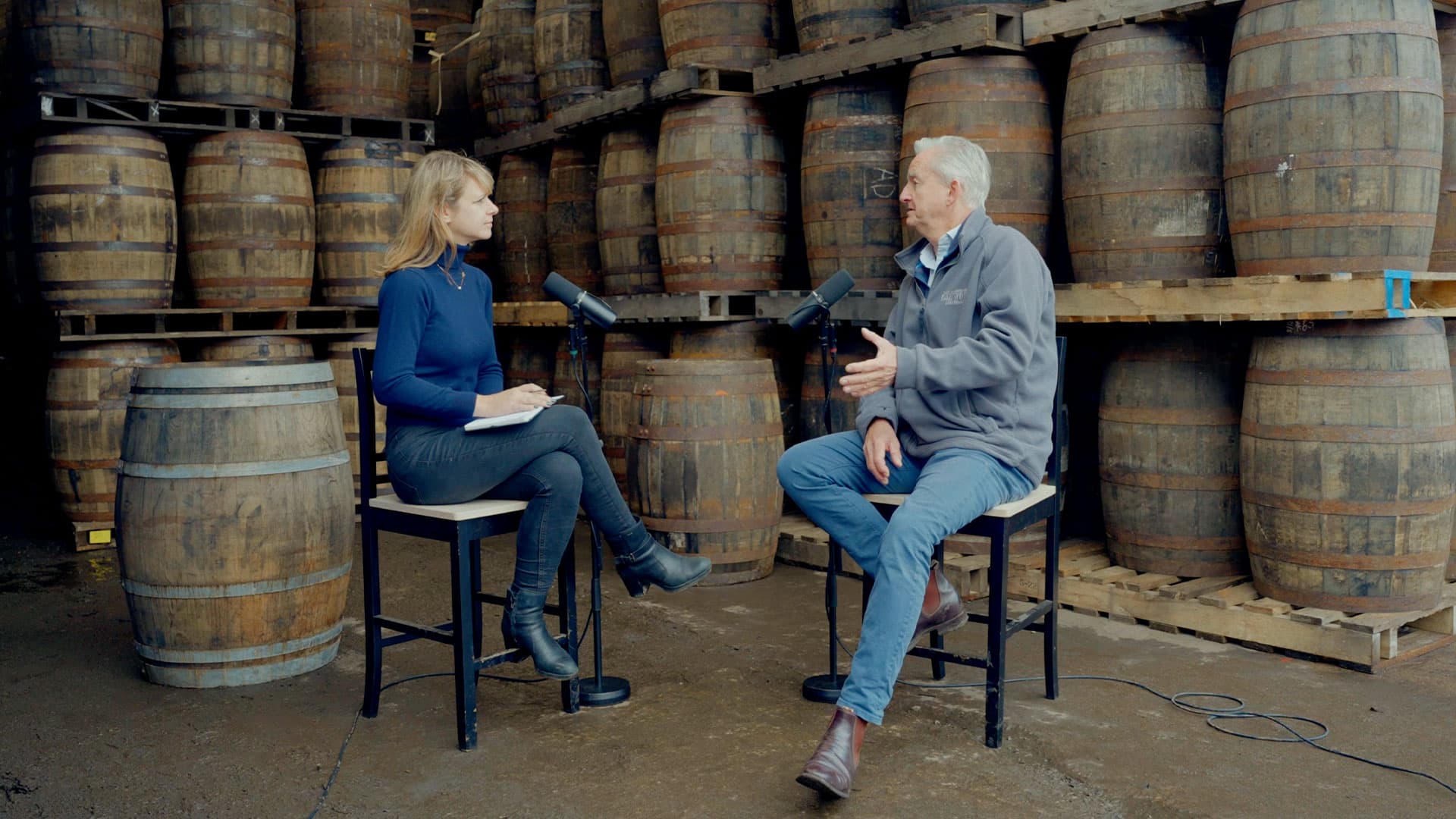
In this episode of The Whisky Investment Podcast by VCL Vintners, host and whisky journalist Alwynne Gwilt visits Oakwood Cooperage near Glasgow for a hands-on conversation with chairman Graham Hamilton. Surrounded by the sounds of hammers, hoops and heavy oak, the episode explores the craft of coopering, its critical role in Scotch whisky production and how one independent cooperage has grown from a bold idea into a 160-strong operation serving distilleries across Scotland.
From Brave Pills to 160 People
Hamilton’s route into coopering was unconventional. His background is in commercial property, but through work with new distilleries and bonded warehouse investments he came to know the whisky industry well. In 2018, he met Brent Bowie, one of Scotland’s most experienced coopers, a man who left school at 14 and has worked for every major independent cooperage as well as Diageo and William Grant.
Together, they identified a gap in the market. The last new cooperage in Scotland had been established in the 1990s, and demand for cask repair and reconditioning was outstripping supply. They raised capital, wrote a business plan and, as Hamilton puts it, “took our brave pills” to launch in Keith, Moray, in November 2018.
Within a year, a second site opened in Uddingston, just outside Glasgow, driven by customer demand in the Central Belt where a significant proportion of Scotland’s whisky is produced. A third, more basic operation followed in Airdrie. Today, Oakwood employs around 160 people and services everyone from one-man-band independent bottlers to some of the industry’s biggest names.
Why the Cask Matters More Than You Think
Hamilton is quick to frame the significance of coopering for anyone unfamiliar with the process. Industry consensus holds that around 70 per cent of whisky’s colour, character and flavour comes from the cask it matures in, with the remainder influenced by barley, yeast and water. Cask selection, then, is not a peripheral concern. It is central to what ends up in the bottle.
One of the most common questions Hamilton fields is how many new barrels Oakwood makes. The answer is none. While the cooperage has the physical capability to build casks from scratch, it does not, because Scotch whisky must mature in a cask that has previously held another spirit. Roughly 80 per cent of Scotch is matured in ex-bourbon casks from the United States, with the remainder going into sherry, port and wine casks, mostly from Spain and Europe.
What Oakwood offers is a comprehensive cask management service: repairing, refurbishing and reconditioning casks at various stages of their working lives to keep them productive for as long as possible.
Dechar, Rechar and the Art of Rejuvenation
At the heart of the cooperage’s work is the dechar and rechar process, a method of extending a cask’s useful life by stripping back the spent charcoal layer inside and recharring the exposed wood beneath.
When a new cask is first built, it is set alight on the inside, charring the oak and releasing the chemical compounds that give bourbon its flavour. After one or two maturations of Scotch, that char layer becomes depleted. Oakwood’s coopers remove it using what Hamilton describes as a giant wire brush, exposing a fresh layer of oak, which is then charred again to replicate the conditions of a brand-new cask.
Beyond this core process, the cooperage offers a range of specialist services. Some distillers request hybrid builds, combining seasoned whisky staves with new American oak ends to achieve a particular flavour profile. Others commission smaller formats: quarter casks at 125 litres or octaves at around 65 litres, where the increased wood-to-liquid ratio accelerates maturation. Hamilton notes that within three to six months, a distiller can get a strong impression of how the wood is influencing the spirit, making these smaller formats a useful tool for experimentation.
The finishing trend, too, has grown markedly. Pedro Jiménez sherry butts, for example, have become a popular vessel for smoky Islay malts, where the sweetness of the sherry wood complements the peat. Hamilton observes that cask type and character are now used far more prominently in the marketing of whisky products than when Oakwood first launched.
A Skilled Trade, a Proud Culture
Coopering is a four-year apprenticeship, as long as or longer than a university degree, and Hamilton speaks with evident pride about the culture that has developed at Oakwood. From the outset, co-founder Brent Bowie insisted on taking on apprentices. The majority of Oakwood’s qualified coopers started as labourers, progressed through the apprenticeship and earned their papers on site.
The work is physically demanding, but retention has been strong. Hamilton attributes this to a straightforward philosophy of looking after people. Some experienced coopers who had left the trade to raise families or pursue other careers have returned, taking on roles in training or in the critical job of testing every cask before it leaves the yard.
Navigating the Cycle
The conversation turns inevitably to the current state of the whisky market. Sales are widely reported to have softened, and Hamilton acknowledges a range of contributing factors: the post-COVID correction after a spike in at-home consumption, global food inflation squeezing consumer spending, the appetite-suppressing effects of GLP-1 drugs such as Ozempic, and a generational shift away from alcohol among younger drinkers, though Hamilton believes this trend is already moderating.
For Oakwood, the downturn has changed the mix of work rather than eliminating it. The number of casks being traded has reduced, but demand for repair and refurbishment has risen significantly as distilleries look to extend the life of their existing stock. It is a shift driven partly by cost management and partly by a genuine commitment to sustainability.
Hamilton is sanguine about the long-term trajectory. Whisky, he notes, has always been cyclical, and the current correction follows years of sustained 6 to 8 per cent annual growth. Even pre-COVID, the industry was anticipating some form of recalibration. In his view, the fundamentals remain sound.
Sustainability and the Second Life of Oak
When a cask finally reaches the end of its working life, which can be 30, 40, or in the case of some larger sherry butts, 60 to 80 years, Oakwood tries to recycle everything. The iron hoops are typically still usable. The cask ends, or heads, which have less exposure to spirit, can often be repurposed. Exhausted staves find new life as garden furniture, particularly planters and tubs.
Off-cuts fuel a biomass heating system that warms the cooperage through the Scottish winter. At the Keith site, a significant volume of staves goes to the smokery trade for smoking salmon. Sawdust is compressed into pellets for domestic fires. Whatever cannot be reused is sold as firewood.
Hamilton acknowledges that Oakwood is still working to improve the accuracy of its sustainability measurements and carbon footprint reporting, but the direction of travel is clear: waste as little as possible, extend the life of every piece of oak and ensure the cooperage contributes positively to the industry’s environmental credentials.
The Global Outlook: Growth Beyond Traditional Markets
Looking ahead, Hamilton is optimistic. He notes that almost every country in the world now produces whisky, but Scotch remains the benchmark, the iconic home of the spirit. Many of the best international producers, whether in India, China or Japan, are using traditional Scottish techniques, which he sees as a testament to the enduring prestige of Scotch.
The growth areas, he believes, lie beyond Europe and America, where mature markets are flattening. Asia, India, Sub-Saharan Africa and South America all present emerging opportunities, backed by large and growing populations. He points to the highball’s resurgence across the Far East, where whisky and soda with a squeeze of lime is being promoted as an accessible, refreshing serve that appeals to a younger demographic.
At home, Hamilton sees a similar shift. Whisky is shedding its reputation as an older person’s drink. Cocktail culture has helped, and so has a broader movement towards quality. He highlights the impressive standard of younger whiskies, noting that commentators are praising the quality of some four and five-year-old expressions. The standard, in his view, has never been higher.
A Cooperage at the Heart of It All
Gwilt closes the episode by reflecting on how valuable it is to see the process up close: the skill, the physicality and the sheer craft that goes into preparing every cask before it ever reaches a distillery. Hamilton’s story is one of spotting a gap, backing it with conviction and building something that now sits at the heart of Scotland’s whisky supply chain.
It is a reminder that behind every bottle of Scotch, behind every tasting note and every label, there is oak. And behind that oak, there are coopers.
Let's talk whisky and spirits.
Connect with our team to explore investment opportunities.
Journal Highlights



Newsletter
Stay ahead of the market. Get access to exclusive offers, events, insights, and news straight to your inbox.