


Whisky Investment Podcast S3 E8 – Industry Insights: The Rebirth of English Whisky with Andrew Nelstrop, The English Distillery
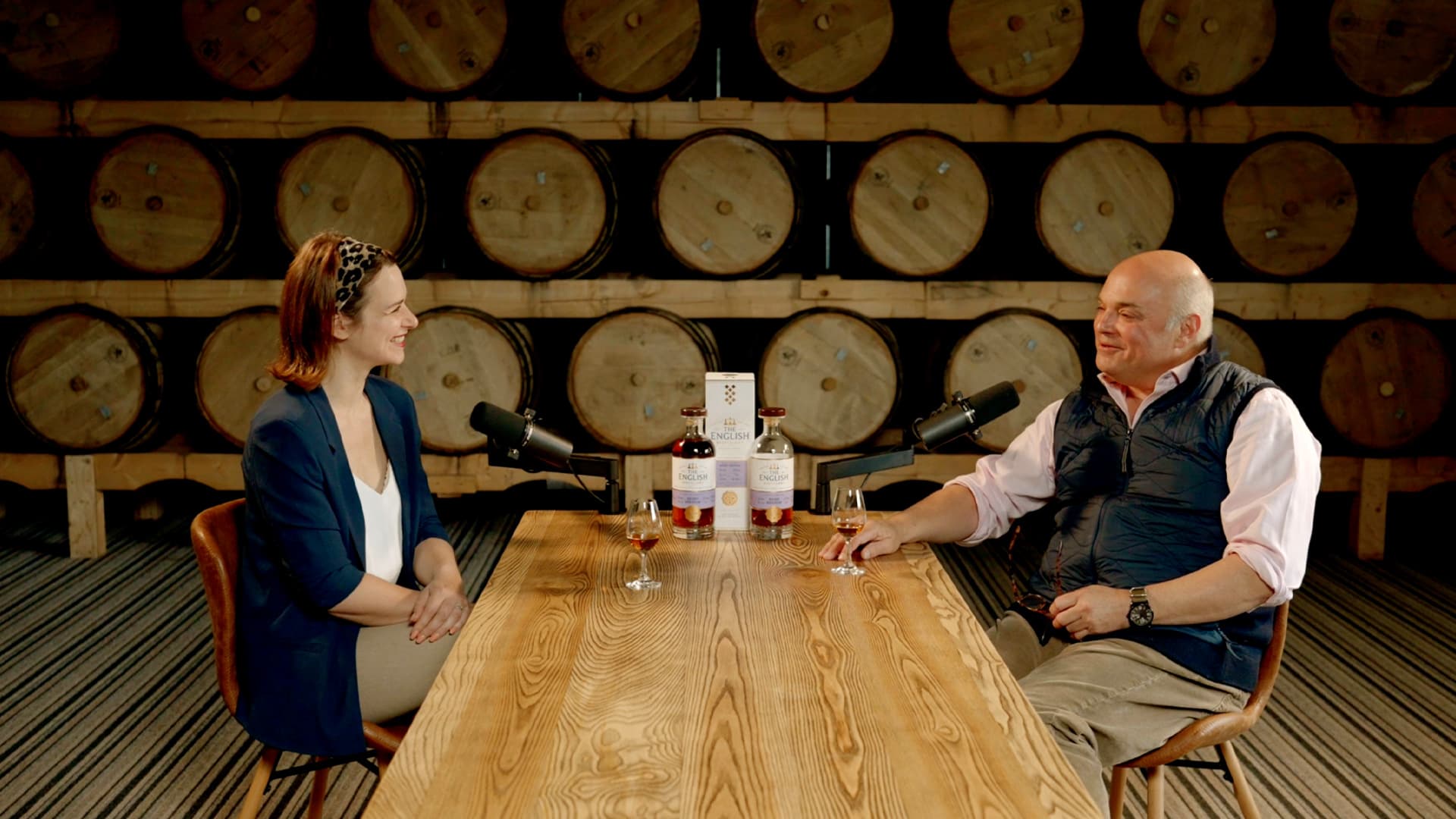
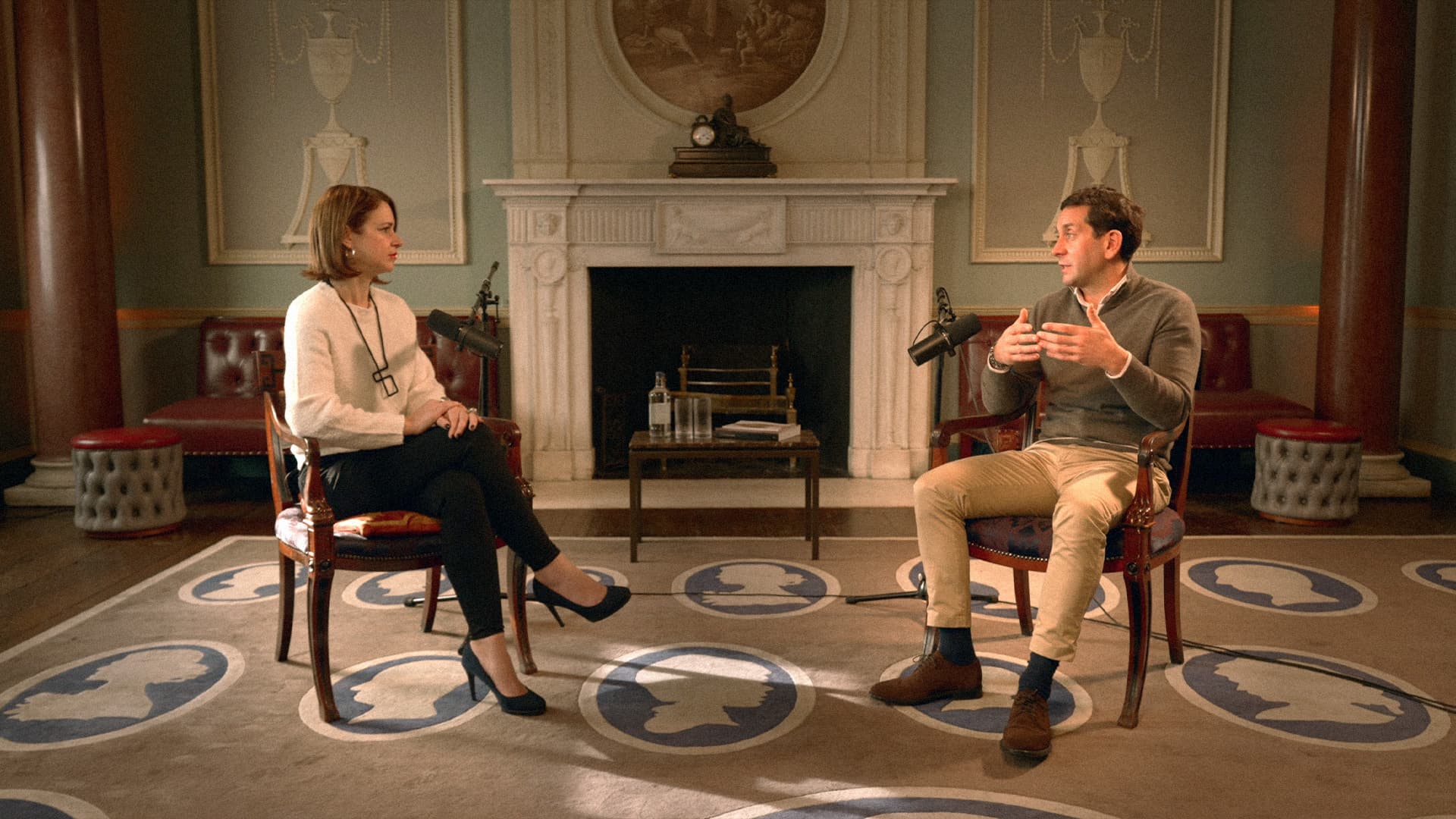
In this episode of The Whisky Investment Podcast by VCL Vintners, host and whisky journalist Alwynne Gwilt travels to The English Whisky Distillery in Norfolk to mark twenty years since its founding. She is joined by Andrew Nelstrop, who took over the business from his father and has spent two decades turning what began as a farmer's stubborn grievance into one of England's most decorated whisky producers. The conversation ranges from the distillery's unlikely origins and a very long royal visit to the discipline of ageing stock patiently, the growing rulebook of English whisky, and what it actually takes to survive twenty years in the trade.
A Farmer's Grievance Becomes a Distillery
The English Whisky Distillery traces its roots to a grievance passed down through a farming family. Nelstrop's grandfather, farming barley in Lincolnshire, resented that his crop always had to travel north to Scotland to become, as Nelstrop puts it, "something useful." The idea stuck with Nelstrop's father, who farmed across Lincolnshire, Norfolk, Suffolk and Australia before, at 60, finally deciding: "If you wanna do it, do it."
The original plan was modest, a small farm distillery intended mainly to keep the family and their mates in free whisky. HMRC had other ideas. A minimum legal still size of 1,800 litres, then in force, ruled out anything tiny, so rather than abandon the project, the family built big instead. Nelstrop still isn't sure the distillery has ever run to full capacity, which in theory could produce three-quarters of a million bottles a year. "I couldn't sell it," he says simply.
Distilling began in 2006, on the same kit still in use today, making the operation England's first newly registered whisky distillery of the modern era. An earlier distillery in London's Lea Valley had closed in 1903, not long after switching to gin. It would be several years before anyone else in England joined them.
A Very Long Royal Visit
Among the milestones Nelstrop reels off, one stands out for how nervous it made him: being opened by the then Prince Charles, now King Charles, in the summer of 2007. “We expected him to come for 40 minutes,” Nelstrop recalls. “He stayed for about four hours.” The King, known for speaking his mind on architecture, evidently approved of the building, a relief given the stakes.
Recognition for the whisky itself took longer, as it had to. A double gold at the San Francisco World Spirits Competition around 2010 or 2011 was the first proper marker, but the real headline moments came recently: the distillery's sherry cask expression was named World's Best Single Malt Whisky at the World Whisky Awards in 2024, news Nelstrop only discovered after landing on a holiday that promptly disappeared into laptops and follow-up calls. A year on, a peated small batch expression won World's Best Small Batch Single Malt.
What Nelstrop is proudest of, though, is what didn't happen afterwards: the price didn't change. Having watched a rival triple its prices overnight after a similar win on a tiny production run, he believes English Whisky Co. is the only producer to have won the award without putting the price up, because both award-winning expressions belong to the core, ongoing range rather than a one-off batch. “If it was 60 quid before the award, it's 60 quid after,” he says. “My belief is you don't piss them off,” he adds, meaning the loyal customers the business depends on.
Two Base Spirits, an Infinite Number of Whiskies
Behind the range sits a deliberately simple production philosophy. Aside from one week a year, the distillery makes only two spirits: one peated, one unpeated. Despite the industry's evident fondness for all things smoky at whisky shows, Nelstrop says real-world drinkers favour the unpeated spirit by some margin, so that's where most of the output goes.
From there, variety comes almost entirely from wood and time. Bourbon casks, sourced personally on trips to Kentucky, form the backbone of the core range because of their consistency; Nelstrop is "quite religious" about traceability, knowing exactly what mash bill previously sat in every cask. Other spirit is finished or fully matured in rum, sherry, port and various wine casks. The distillery's own trial and error is instructive: spirit put into red wine casks early on took around seven years to become good enough, long enough that, had the casks been rented storage elsewhere, they might have been abandoned. Because the distillery owns its warehousing outright, they simply sat in the corner until they were ready. Sweet white wine casks, by contrast, show their effect much faster. “The overwhelming thing in whisky,” Nelstrop says, “is have you got enough time?”
Roughly once a year, the distillery also runs a week producing grain whisky, sometimes with seven different grain types in a single batch, as a deliberate training exercise for newer distillers, letting them experiment with cut times and mashing temperatures away from the tightly controlled recipe that governs the core range.
Losing a Founder, Finding a Brand
Nelstrop's father died in 2014, and the aftermath prompted two immediate decisions. The first was to finally hire a branding agency: everything until then, including labels, had been designed in-house on a Word document, paperclip icon included. With hindsight, Nelstrop believes that overhaul should have happened on day one. The second was opening the on-site restaurant, part of a broader realisation that a whisky distillery's main business is rarely just whisky. Tourism and events now do heavy lifting: the site draws roughly 80,000 visitors a year, against an original business plan that projected 1,500.
The Luxury of Not Owing Anyone
Nelstrop is candid that remaining family-owned isn't inherently virtuous; plenty of well-run distilleries thrive with outside investors. What matters, he argues, is control over the timing of your own maturing stock. Investors, banks and shareholders all eventually require a return, which can force a business to sell casks at three years old rather than let them develop. Without that pressure, the distillery can simply decide a whisky isn't quite ready and leave it, including a rolling cask programme stretching fifty years out, well beyond Nelstrop's own tenure. He traces the mindset to his farming background: “Every farmer will plant a wood at some point, or a hedge line. They are not gonna see the benefit of that wood. It is for generations down the line.”
Setting the Rules for a New Category
Nelstrop is also a founding member of the English Whisky Guild, formed with three other producers, Cotswolds, Copper Rivet and what was then the Oxford Artisan Distillery, initially just to promote English whisky as a category. That quickly became more complicated once the group discovered a whisky on sale that had clearly been imported and merely bottled in England, exploiting a gap in the post-Brexit rules, which required only that whisky be made from grain and matured in wood for three years, with no requirement that it actually be made in the country named on the label.
The Guild, now roughly twenty distilling members strong, has spent several years pursuing a Geographical Indication for English whisky, the same legal mechanism that protects Stilton cheese or Melton Mowbray pork pies, currently sitting with the Secretary of State for approval. The balancing act, Nelstrop says, is staying true to recognisable terms like single malt (malted barley, one distillery) while avoiding some of Scotch whisky law's stricter quirks: the English rules will permit a brewery and distillery on the same farm to count as one site, will allow maturation in wood beyond oak, and will allow bottling overseas, reducing the need to ship glass around the world.
“We are still all bar one owned by founders and passionate people,” Nelstrop says of the Guild's membership, reason enough, in his view, to get the rules settled now, before the category attracts conglomerates who might not care.
Weathering the Industry's Current Cycle
On the well-publicised slowdown across the wider whisky industry, Nelstrop is unruffled. He argues the pain falls hardest on producers who have poured huge capital into new capacity and now, like Jim Beam, are turning stills off for a year or more. A business sitting on twenty years of maturing stock, by contrast, can absorb a soft year or two without much difficulty, simply ending up with more twelve-year-olds than ten-year-olds. He also expects the current dip in young, unaged spirit sales to surface later as an unusually high proportion of older stock quietly folded into standard blends, a pattern he has seen before in the wider industry.
Advice for the Next Generation
Asked what he'd tell someone eyeing the industry today, Nelstrop doesn't hesitate: start younger. Between the years needed for stock to mature and the years needed to build a market, the payoff can take a decade or three, reason enough to begin in your forties rather than your sixties. He also draws a sharp distinction between two types of entrant: the marketeer who builds a brand first and sources product to fit it, usually with an exit plan already in mind, and the producer-led model his own family followed, which trades faster returns for longevity. "It's a very slow burn," he says. Whichever path, his closing advice is blunt: think hard about it before you buy a still.
Twenty years on, that farming grievance about barley heading north to Scotland has become 73 whisky distilleries across England, a Guild working to define the category properly, and a family business still run on the same patient logic Nelstrop's father brought in from the fields: plant now, and let time do the rest.
Let's talk whisky and spirits.
Connect with our team to explore investment opportunities.
Journal Highlights


Newsletter
Stay ahead of the market. Get access to exclusive offers, events, insights, and news straight to your inbox.