


Whisky Investment Podcast Episode 8 – Industry Insights: English Whisky and Sustainability with Chico Rosa of Fielden Distillery

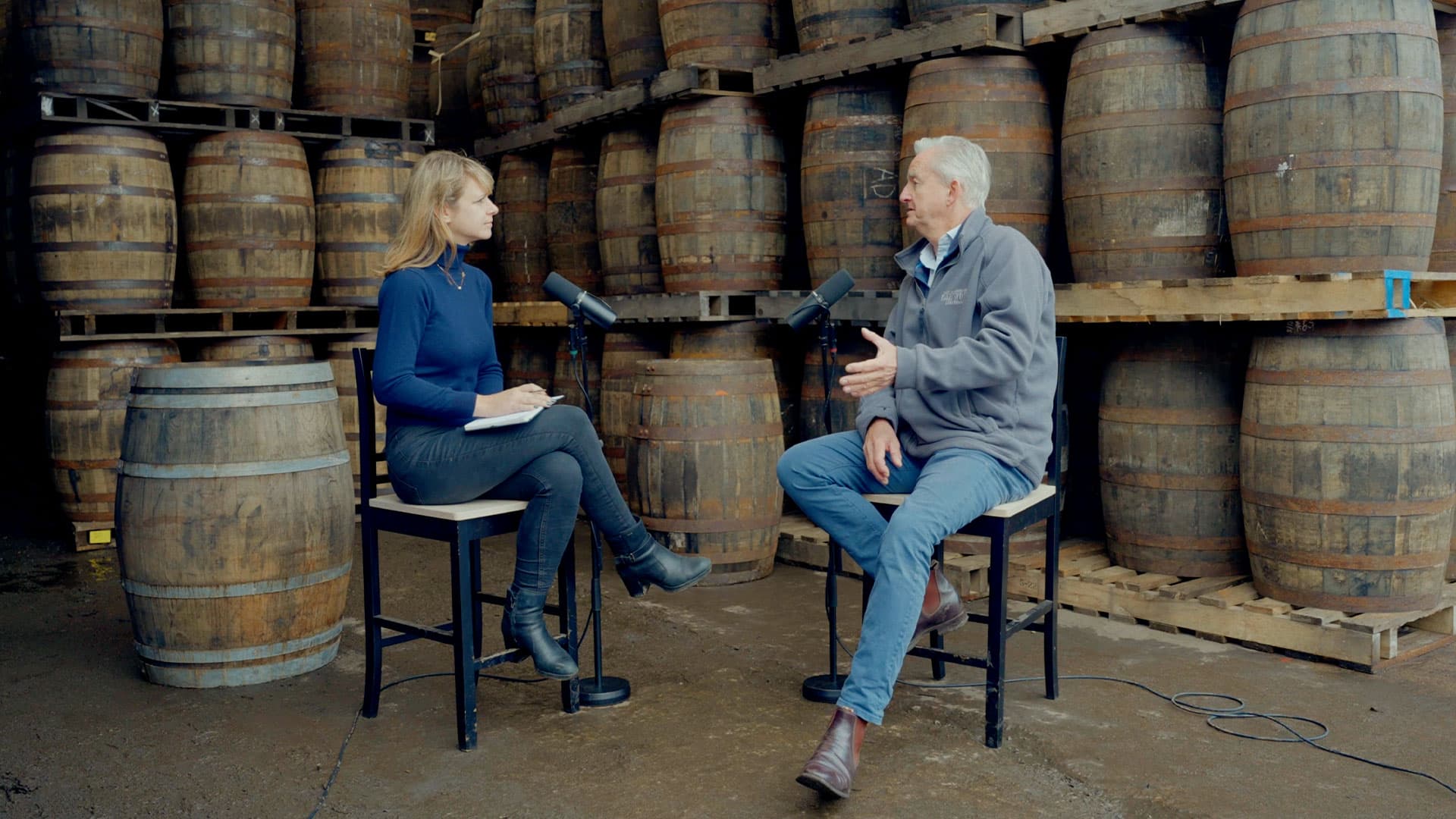
In this episode of The Whisky Investment Podcast, whisky journalist Alwynne Gwilt sits down with Chico Rosa, master distiller at Fielden Distillery, to discuss how grain diversity, regenerative farming, and innovative distilling techniques are shaping the future of whisky. With a background in Portuguese winemaking and a passion for flavour exploration, Chico brings a unique perspective to whisky making—one that starts in the fields and extends all the way to the glass.
From Oxford Artisan Distillery to Fielden: A Whisky Evolution
Fielden Distillery, formerly known as The Oxford Artisan Distillery (TOAD), has undergone a transformation. Originally focused on producing whisky, gin, and vodka, the distillery has shifted its full attention to whisky, deepening its focus on grain diversity and sustainable farming.
Chico, who has been with the distillery since its early days, explains the transition:
“As we expanded our grain-growing regions beyond Oxford to areas like Norfolk and Cornwall, the name ‘Oxford’ no longer fully reflected what we were doing. Fielden better represents our commitment to working directly with the land.”
Regenerative Farming and Grain Diversity in Whisky
One of the key pillars of Fielden’s approach is regenerative agriculture—working with farmers to improve soil health, promote biodiversity, and cultivate heritage grains. Unlike traditional whisky production, which often relies on a limited number of barley varieties, Fielden experiments with a wide range of grains, including rye, wheat, spelt, einkorn, and maize.
“Rye is our main grain because it naturally cross-pollinates, creating unique genetic diversity in each harvest,” Chico explains. “This not only strengthens the crop but also enhances the complexity of flavour in the whisky.”
The team also experiments with companion planting, where different crops are grown together to support each other. For example, wheat is planted alongside rye to help stabilise the taller rye stalks against strong winds.
How Grain Affects Whisky Flavour
Most discussions around whisky flavour focus on cask influence, but Chico is passionate about exploring how different grains contribute to a whisky’s character from the very beginning.
“Whisky is shaped by so many factors—fermentation, distillation, cask maturation—but it all starts with the grain,” he says. “Because we grow multiple varieties in a single field, each grain has a slightly different composition, which impacts fermentation, viscosity, and ultimately the flavour of the whisky.”
Fielden’s rye whisky, for example, showcases bright citrus, herbal, and floral notes—distinct from the heavier, spicier rye whiskies typically found in North America.
Sustainability in Whisky Production
Beyond grain selection, Fielden is part of a wider movement towards sustainability in whisky making. The industry is increasingly focused on reducing water usage, minimising waste, and reconsidering packaging materials, but Fielden takes it a step further by prioritising soil regeneration and biodiversity.
“We don’t own farmland ourselves—we work with farmers who are at different stages of transitioning to more sustainable practices,” Chico says. “Some have farmed conventionally for generations, while others are experimenting with organic or biodynamic methods. It’s about learning together.”
Rather than adhering to a specific certification, Fielden’s approach is adaptable, focusing on continuous improvement and long-term impact.
The Future of English Whisky
English whisky has been experiencing a renaissance, with new distilleries opening across the country. While Scotch whisky has centuries of tradition, English producers have the freedom to experiment with new techniques and styles.
“More distilleries are paying attention to raw materials, not just maturation,” Chico notes. “We’re seeing whisky made from organic grains, heritage varieties, even biodynamic farming practices—things you wouldn’t have imagined ten years ago.”
Fielden itself works with multiple distilleries for contract production, ensuring its grain-to-glass approach is maintained while allowing for flexibility in scaling production.
Final Thoughts
Chico sees whisky as more than just a drink—it’s a vehicle for storytelling, culture, and education.
“Whisky has the ability to cross borders and start conversations in a way that other products can’t,” he says. “It’s about more than just flavour—it’s about understanding where it comes from and how it connects to the land.”
Whether you’re a whisky collector, an investor, or simply fascinated by the craft behind the spirit, this episode offers a deep dive into the future of whisky making. Be sure to tune in for the full conversation!
Let's talk whisky and spirits.
Connect with our team to explore investment opportunities.
Journal Highlights



Newsletter
Stay ahead of the market. Get access to exclusive offers, events, insights, and news straight to your inbox.